

Mechanical Traction
Decompressing the Spine for Lasting Pain Relief
Mechanical traction is a clinically proven, non-invasive therapy used to reduce compression in the spine — relieving the pressure on spinal discs and nerve roots that causes pain, stiffness, and radiating symptoms into the arms or legs. At Healing Star Physical Therapy and Wellness, we use mechanical traction as a targeted component of your individualized treatment plan to accelerate recovery and help you move freely again.
We offer mechanical traction at both our Eatontown and Freehold, NJ locations, administered by licensed physical therapists who integrate it precisely with manual therapy, therapeutic exercise, and other advanced modalities.
How Mechanical Traction Works
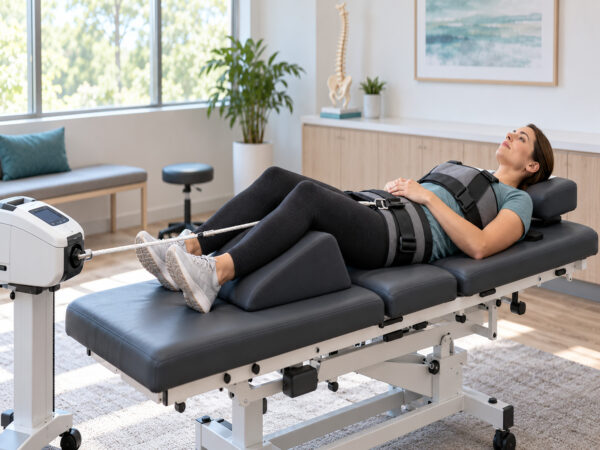
Mechanical traction uses a specialized motorized table to apply a controlled, sustained or intermittent pulling force to the cervical (neck) or lumbar (low back) spine. This distraction force gently separates the vertebrae, creating negative pressure within the intervertebral disc space.
The therapeutic effects include:
- Disc decompression — the separation of vertebrae reduces intradiscal pressure, which can allow bulging or herniated disc material to retract away from the nerve root
- Nerve root relief — reducing compression on irritated spinal nerves decreases pain, numbness, and tingling that radiates into the arms or legs
- Joint mobilization — traction stretches the facet joints and posterior spinal structures, reducing stiffness and improving segmental mobility
- Muscle relaxation — the sustained stretch reduces protective muscle guarding and spasm that perpetuates pain
- Improved circulation — decompression facilitates nutrient exchange within the disc and surrounding tissue, supporting healing
Cervical Traction vs. Lumbar Traction
Mechanical traction can be applied to two primary regions of the spine, each with specific indications:
Cervical Traction (Neck)
Applied in a supine (lying) position with a specialized halter around the base of the skull, cervical traction is particularly effective for disc herniations in the neck, cervical radiculopathy (nerve pain radiating into the arm), and facet joint compression. The precise angle of pull is adjusted to target the specific spinal level involved.
Lumbar Traction (Low Back)
Applied in a lying position with a pelvic harness, lumbar traction targets disc herniations, sciatica, spinal stenosis, and degenerative disc conditions in the lower spine. Lumbar traction is especially beneficial for patients whose leg symptoms (sciatica) are aggravated by prolonged sitting or standing and relieved by lying down.
Conditions Mechanical Traction Treats
Mechanical traction is most effective for:
- Cervical disc herniation with or without radiculopathy
- Lumbar disc herniation and sciatica
- Spinal stenosis (narrowing of the spinal canal)
- Degenerative disc disease
- Facet joint syndrome
- Neck and back pain with referred symptoms into the arm or leg
- Post-surgical spine cases (where appropriate and cleared by physician)
What to Expect During Treatment
Before beginning traction, your physical therapist will conduct a thorough evaluation to confirm it is appropriate for your condition. Not all spinal conditions are suited for traction — contraindications include certain types of spinal instability, osteoporosis, and active inflammatory conditions, among others. Your therapist will screen carefully and only recommend traction when it is clinically indicated.
A typical session lasts 10 to 20 minutes. The traction force is applied gradually and can be set to sustained (constant pull) or intermittent (alternating pull and release) mode depending on your condition and tolerance. Most patients find the procedure comfortable — many describe it as a gentle relief of pressure.
Traction is most effective when combined with manual therapy and therapeutic exercise as part of your comprehensive treatment plan. Your therapist will integrate it strategically to maximize the benefit of each session.
Do I Need a Referral?
New Jersey is a direct-access state — you do not need a physician referral to begin physical therapy, including mechanical traction. If you have been dealing with disc pain, sciatica, or radiating arm symptoms, you can call us directly and get started right away.
Start Your Recovery at Healing Star PT
If compressed discs, nerve pain, or radiating symptoms have been holding you back, mechanical traction may be the tool that unlocks your recovery. Our team at Healing Star Physical Therapy and Wellness is ready to build a plan that gets you moving — and keeps you that way.
Eatontown, NJ: 145 Wyckoff Rd, Suite 102 — (848) 208-2721
Freehold, NJ: 501 Iron Bridge Road, Suite 2 — (732) 272-1438
Ready to experience the Healing Star difference?
Book an appointment and take the first step toward feeling better.